
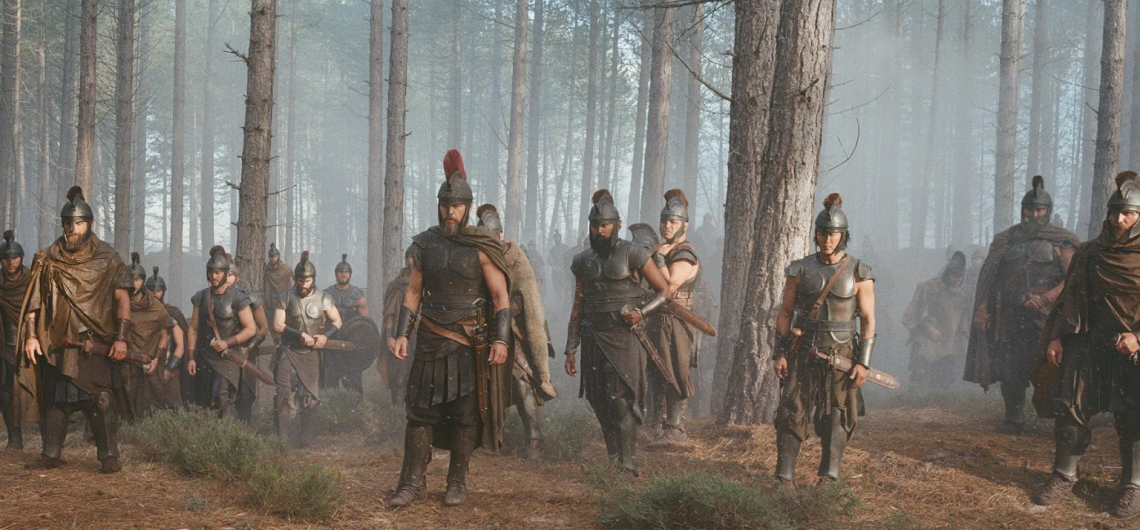
The Odyssey filming locations in Greece are only part of the story. Christopher Nolan is famous for refusing green screens, and this film was no exception: the production shot on real locations across Morocco, Greece, Italy, Iceland, Scotland and Malta over a 91-day shoot, using a new 70mm IMAX camera system rather than digital backdrops. For most viewers that’s a technical detail.For a nature lover, it’s an invitation to a game: because nothing was painted in afterwards, every clifftop, dune and cave in the film is carrying its own honest signature; especially to a trained Nature lover’s eye! It’s not uncommon for the birding community to make a fuss, when hearing a hawk’s cry played over a Bald eagle’s shot. The plants, soil colour and light often only occur in one specific part of the world. Watch closely enough, and you can tell.
What every actor participating in the film says and gets excited about, is that “Everything is real in Chris’ movies”. Here’s the twist: only a handful of the film’s most iconic-looking ‘Greek’ moments were actually filmed in Greece. The rest, including scenes many viewers assume are the Aegean, were shot thousands of kilometres away, in landscapes that only look similar at a glance. So, before we get to the real Peloponnese locations behind the film, here’s how to catch the stand-ins.
The giveaway: sites pretending to be somewhere else
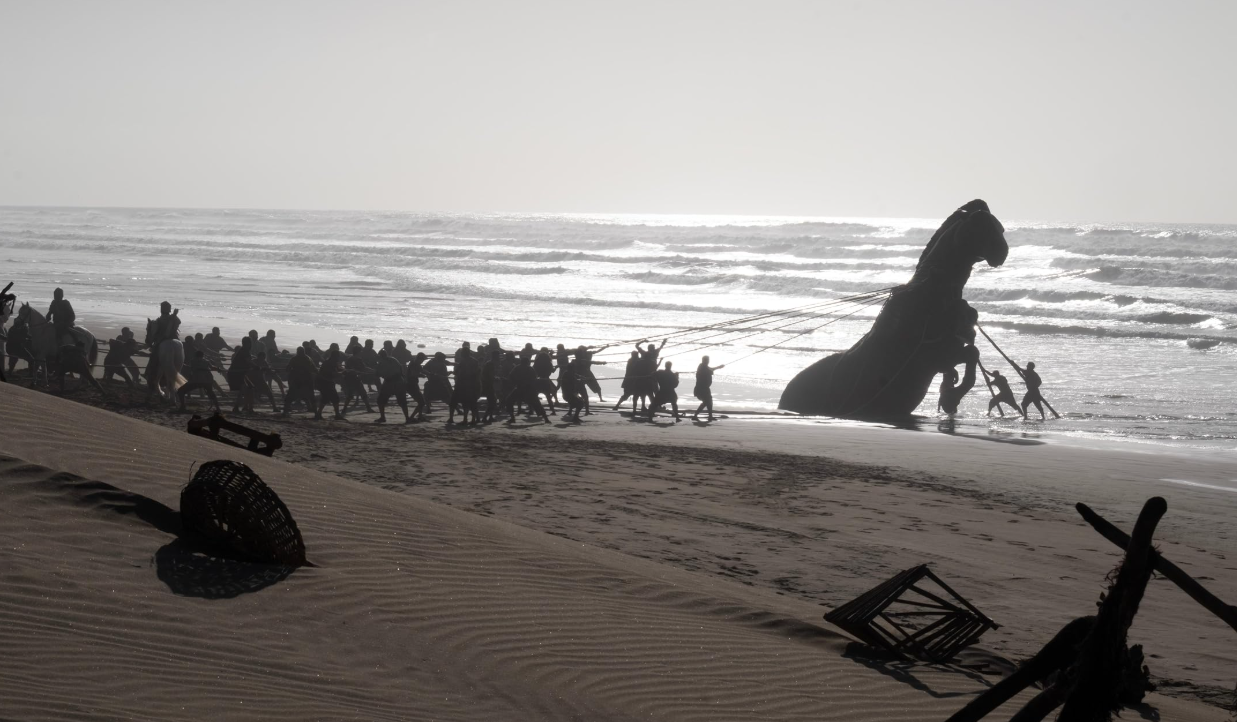
Troy — is actually Morocco. The burning city of Troy was filmed at the red clay ksar of Aït Benhaddou and the coast around Essaouira. This is arganier country: home to the argan tree, a gnarled, thorny species found naturally nowhere on Earth outside Morocco and a sliver of Algeria. Its low, silvery, drought-hardened canopy looks nothing like Greek phrygana — a single glimpse of one is the clearest possible sign you’re not in the Peloponnese, whatever the set dressing suggests.
The Underworld — is actually in Iceland. Odysseus’s descent to meet the prophet Tiresias was filmed on the black volcanic sands of Hjörleifshöfði, on Iceland’s south coast. There’s no Mediterranean shrub here at all — just basalt, ash-black sand and cold-climate moss and lichen. It’s an easy one to spot: the total absence of any green, silver or flowering plant is itself the clue.
Ithaca — actually Sicily, and the hardest to catch. Odysseus’s home, including Penelope and Telemachus’s besieged palace, was filmed on Favignana island off Sicily, centred on the clifftop Castello di Santa Caterina. This is the one stand-in that can genuinely fool a nature lover, because Sicily and the Peloponnese share the same Mediterranean climate and much of the same maquis and phrygana flora — wild olive, myrtle, thyme, spurge. Nolan could get away with the swap precisely because the ecology, not just the postcard view, lines up.
Add in Scotland’s Aberdeenshire coast on the North Sea for a handful of mythic and Mediterranean-adjacent shots, and Malta’s water tanks for underwater and ship sequences, and the film quietly becomes a round-the-world tour disguised as a single Greek voyage.
The Real Odyssey Filming Locations in Greece: unmistaken Peloponnese
Which makes the scenes actually filmed in Greece worth knowing by name. Nolan’s crew spent March and April 2025 in Messinia, in the southwestern Peloponnese, filming at Nestor’s Cave, Voidokilia Beach, Methoni Castle and Acrocorinth. Pylos, the nearby town, carries its own Homeric pedigree as the legendary kingdom of King Nestor. Just outside it, lies the Gialova Lagoon, a Natura 2000 wetland where, every spring, flamingos wade the shallows, herons work the margins and migrating raptors pass overhead.
It’s this same landscape that anchors the opening days of our Spring in the Peloponnese tour, based three nights in Pylos, exploring a lagoon home to an extraordinary 46 species of reptiles and amphibians, including the African Chameleon, found nowhere else in Europe.
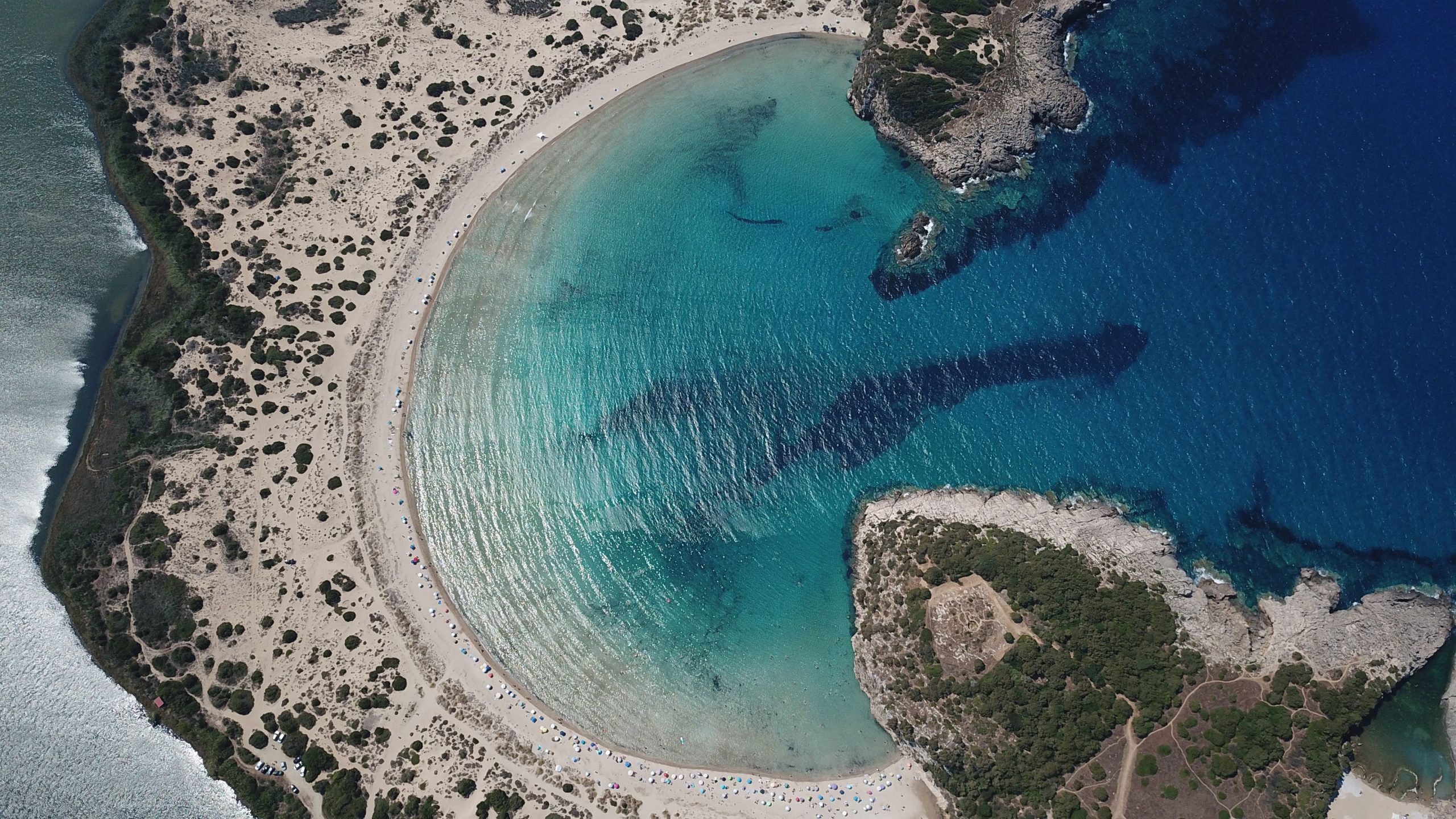
Voidokilia Beach — genuinely, unmistakably Greek
A short drive from Pylos, Voidokilia’s near-perfect crescent of sand, cradled by dunes and turquoise shallows, needed no help from a location scout elsewhere. Its dune systems support classic Mediterranean phrygana — including the Greek spiny spurge, whose acid-yellow flowers appear each spring — alongside wetlands sheltering dozens of bird species. Compare that scrubby, low, silver-green cover to the bare red earth around Aït Benhaddou, and the difference is obvious even in a single still frame.
Nestor’s Cave — the real Cyclops, not the Underworld
Tucked into the limestone cliffs above Voidokilia, Nestor’s Cave is traditionally linked to the Homeric king and, more recently, reported to have doubled as the lair of Polyphemus the Cyclops during filming. It’s worth remembering this is a different scene from the Underworld sequence shot in Iceland — two moments that feel mythologically adjacent in the story but sit an ocean apart in reality. The cliffs here are working habitat, too, providing nesting ledges above a coastline shaped by wind and sea for millennia.
Methoni Castle — and its Sicilian twin
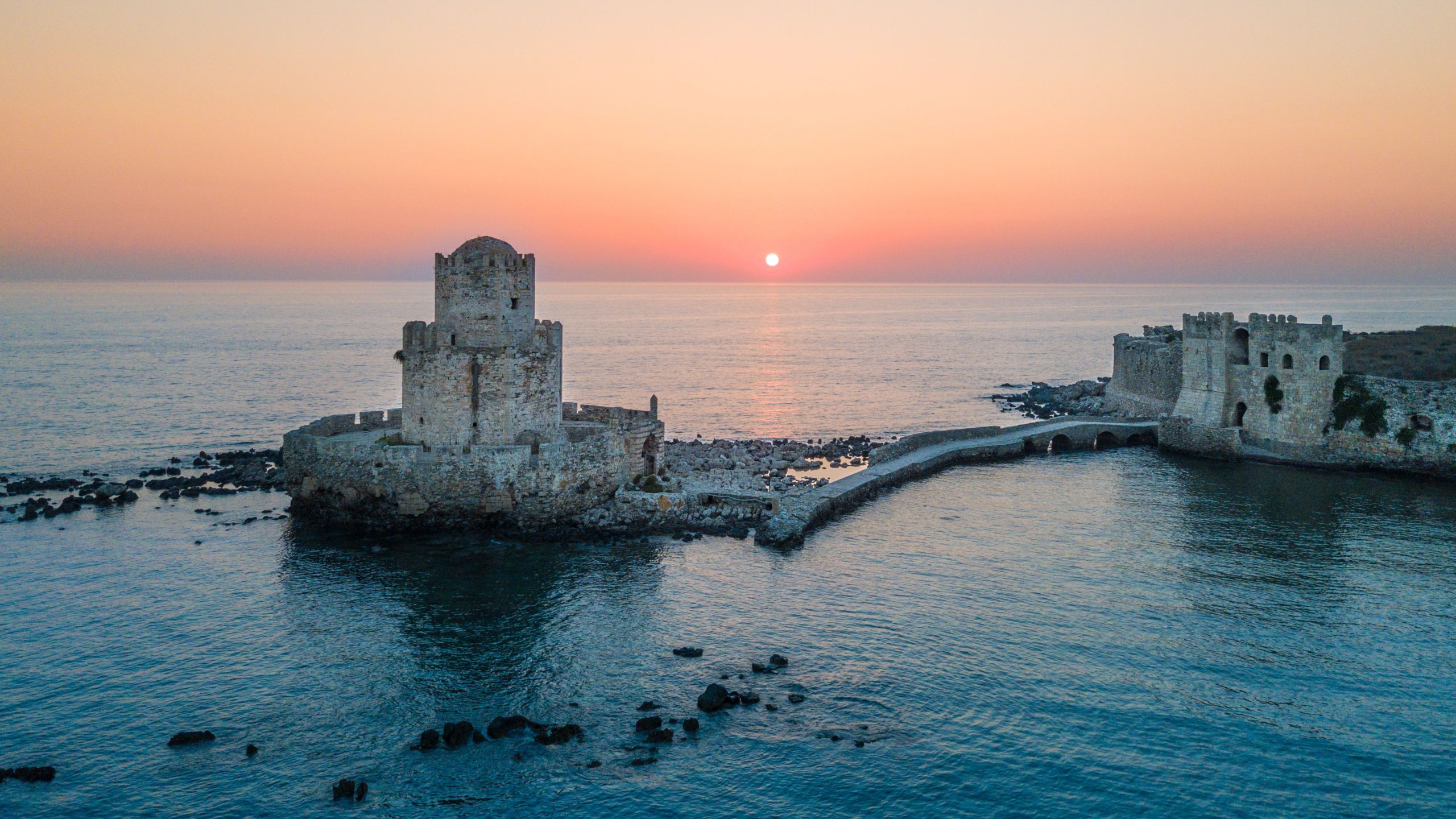
At the southern tip of Messinia, the 13th-century Venetian fortress of Methoni juts into the sea on its own headland, one of the finest surviving castles of its kind in the Mediterranean. It’s a genuine Greek filming location — but it’s also the perfect place to appreciate why Favignana’s Castello di Santa Caterina could pass as Ithaca. Stand on Methoni’s ramparts, looking out over coastal scrub and passing seabirds, and the vegetation is almost interchangeable with what you’d find on that Sicilian hilltop. Same climate, same plant families, same story.
Why spring gives the game away fastest
Much of the Greek filming took place in spring 2025, which is no small detail. Spring is when the Peloponnese’s phrygana and maquis are flowering hardest — wildflowers carpeting the hillsides, orchids pushing up beneath centuries-old olive groves — and when the contrast with Morocco’s arid ksar country or Iceland’s black sand is at its sharpest. It’s also, simply, the most comfortable season to be out walking these landscapes yourself, long before summer’s heat and crowds arrive.
If spotting the real Messinia for yourself appeals, partnered with NatureTrek, our Spring in the Peloponnese tour is built around exactly this landscape, continuing south from Pylos to the Mani Peninsula and Cape Tenaro before looping back via Mystras and Mycenae. For those who’d like to see how this coastal, birdlife-rich Greece continues further north, our Western Greece: Wildlife & History tour explores the wetlands of Strofylia and Messolonghi — home to Dalmatian Pelicans and large flocks of Greater Flamingos — alongside the ancient site of Olympia. These are the real Odyssey filming locations in Greece — and next spring, you can walk through them yourself.
Nolan’s insistence on real locations turned The Odyssey into an accidental botany quiz. Most viewers will only ever see a beautiful, continuous Greek myth on screen. But stand in Messinia yourself, this spring, among the same spiny spurge and sea-carved limestone the cameras found — and you’ll know you’re looking at the one part of the story that was never faked.
Comments